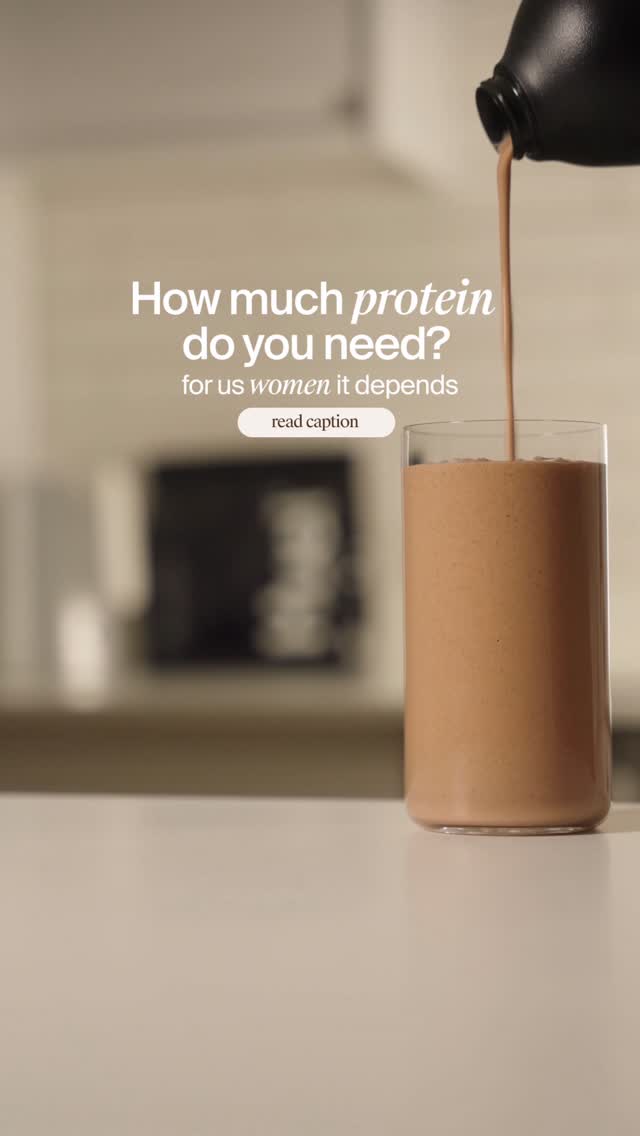
As women, our protein needs change with age, hormones, and activity levels. Here’s the simple breakdown: 20s–30s Even if you’re mostly sedentary, protein supports energy, mood, and muscle. Most women benefit from a high protein intake of 75–100g per day. If you train regularly or lift weights, you may benefit from up to 2g per kg of bodyweight to support recovery and muscle growth. 40s Typically, when Hormones begin to shift (often before menopause). Muscle becomes harder to maintain. Aiming for around 85–110g per day helps protect strength and metabolism. 50+ (peri-menopause and beyond) Oestrogen declines and muscle loss accelerates if we don’t actively support it. Protein becomes a daily priority to minimise muscle loss. Most women benefit from 95–120g per day, depending on size and activity. And this is important: You don’t have to be a gym girl to need protein. You just have to want to feel stronger now - and later. Simple rule if you hate numbers: Include a proper protein source at every meal Build your plate around it Because under-eating protein doesn’t show up immediately. It shows up over time.
Channel/Medium:
Instagram
onApr 23, 2026Huel
huel.com
Details
As women, our protein needs change with age, hormones, and activity levels.
Apr 23, 2026, 8:26 PM
Search thousands of other brands for emails, ads, social media posts, and more.
The Particl web app allows you to see how an email or ad campaign affected sales over time.
Explore emails, ads, and more
Agencies and marketers can cut through the noise and find the best ads, campaigns, and social media content about Huel all in one place. Take it a step further in the Particl app to see how those campaigns are performing.