Western's Two Engines: How Ariat and Tecovas Turn Niche Into Scale

The niche paradox
The default DTC playbook still says move fast, widen the funnel, and chase the biggest addressable market. Western and equestrian retail quietly argues the opposite. The category is lifestyle first, repeat heavy, and hard for a generalist to fake, so a narrow positioning can be the strategy, not the ceiling.
Ariat International and Tecovas both lean into that idea, but they operationalize it in opposite ways. One stretches a western adjacent wardrobe across work, denim, and performance layers. The other concentrates on boots and trades mainly on craft and silhouette. Particl estimated U.S. online revenue shows both models at real scale, with about $868 million in calendar 2024 for Ariat versus about $194 million for Tecovas on the same basis, so the question is not whether the niche pays. It is which shape of niche you want to own.
Tecovas still ladders almost everything back to boots, so activity rockets into November and December and sits lower across mid year. Ariat carries more weight in spring and summer because denim and work layers turn over on a calendar that is not only gifts, so the two brands never share the same rhythm.
Indexed estimated monthly revenue
Indexed online revenue; January 2024 to December 2025. Log scale.
When you plan inventory and cash for Tecovas, that concentration is the headline risk and the headline opportunity. When you plan Ariat, you still respect the fourth quarter, but you also model spring work restarts and denim turnover so you are not waiting until October to move volume.
Two brands, one niche, very different playbooks
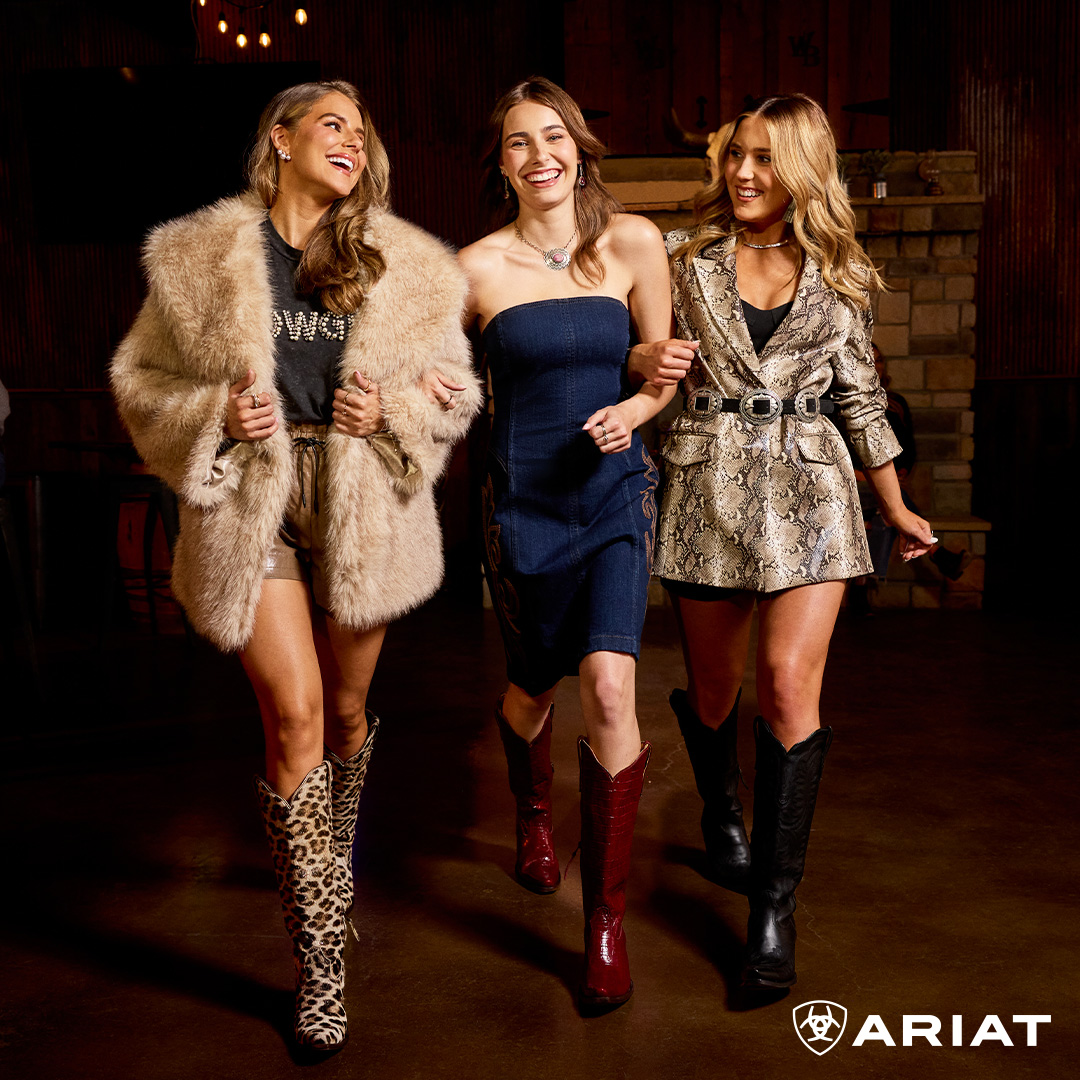
Ariat behaves like a house of brands inside one label: western boots sit beside flame resistant workwear, jeans with boot specific cuts, and performance shirts. The growth theory is horizontal inside the niche, adding occasions that still feel credible on the same ranch, job site, and weekend calendar. Tecovas still reads boot first. The growth theory is vertical: own the wall, refine silhouettes, then walk customers up with exotics and limited builds such as The William at a $775 list band on premium caiman styles. Particl tracks on the order of seven thousand parent products for Ariat versus about two thousand for Tecovas, which matches how wide each operating system tries to be.
Source: Particl Marketing Asset Library
If the horizontal thesis is real, denim and work have to clear the same revenue bands as hero boots without one franchise swallowing the line. The next chart is where that claim gets expensive to fake.
Ariat top products by estimated revenue
Online revenue ($M), January 2024 to December 2025.
Annie and Dean lead, with Doc and Cartwright close behind, which reads as franchise depth on one window rather than a scatter of unrelated ideas.
Tecovas top boots by estimated revenue
Online revenue ($M), January 2024 to December 2025.
Average selling price still tells the positioning story in shorthand. Unweighted monthly means across calendar 2024 land near $115 current price for Ariat against about $125 full price, while Tecovas sits near $300 current against about $310 full on the same monthly series. That is not a judgment on quality. It is a statement about ticket depth and how far each brand pushes promo versus list.
Reading the revenue rhythm
Seasonality is where customer intent shows up. Ariat prints a clear fourth quarter with December 2024 near $96 million in estimated monthly revenue and June 2024 closer to $40 million, which reads like gifting plus spring summer trough on big denim and work volumes. Tecovas puts November and December 2024 together at about $80 million against about $194 million for the full calendar year, so more than two fifths of that year’s Particl estimate lands in those two months alone.

Source: Particl Marketing Asset Library
Owned-site merchandising is one read on intent. The next chart normalizes each brand to its own 100% calendar year so you can see whether gift quarters still swallow the year or whether early months earn their keep. It uses the same Particl dollar estimates as the seasonality paragraph above, split by quarter inside each annual total.
Share of each brand’s calendar year revenue by quarter
% of each brand’s calendar-year online total. Q1 2024 through Q4 2025.
Ariat’s buyer mixes utilitarian replenishment with lifestyle refresh, so the brand keeps a mid year pulse even when it is not holiday. Tecovas skews harder toward gift and occasion peaks, which is efficient when creative and inventory line up, but it raises the stakes for January carryover and for anything that disrupts fourth quarter conversion.
June versus December in nominal dollars is where spring cash discipline and January markdown discipline stop being the same problem.
June versus December estimated revenue
Online revenue ($M), Jun vs Dec 2024.
Holiday dependency is not automatically bad for a niche brand with repeat buyers, but it does change how you think about baseload demand. Community and restockable basics matter because they give you months that are not only promo windows. That is one reason Ariat’s non holiday months still carry volume, and it is why Tecovas invests in work boots and SMS driven urgency when the calendar turns.
Pricing power and discount discipline
Full price versus current price is a blunt health check on how willing customers are to pay the sticker. On monthly averages through calendar 2024, Ariat’s current price runs about eight percent below mean full price on that series, which tracks with steady codes and clearance windows. Tecovas sits closer to a three percent gap on the same monthly average basis, tighter in relative terms even when December still gets promotional layers.

Source: Particl Marketing Asset Library
In categories where the product is identity linked, discounting is not only a margin lever. It is a signal about scarcity and craft. That is why the ladder toward exotic materials and higher tickets matters for Tecovas, and why Ariat uses work and performance proof points to defend price on categories that could otherwise race to the bottom.
Mean list versus mean paid price by brand
Mean list vs mean paid ($), monthly averages, 2024.
The William tier is the product story inside the price story. When a hero boot carries a $775 type list while the core line still moves serious units closer to $300 to $400, you are building a luxury flank without abandoning the entry iconic shapes that feed the funnel.
Estimated discount off list by quarter
Mean discount off list (%), by quarter. Q1 2024 through Q4 2025.
Lean months tempt deeper cuts; gift windows tempt stacking. The strategic question is whether those moves train an anchor on full price or on the next drop, and whether exotics and hero tiers still read scarce when the rest of the line goes loud.
2025 signals and what early data shows
Macro headlines get loud; western still argues in pictures first.

Source: Particl Marketing Asset Library
Tariffs and macro noise put every brand on notice, but the early read in Particl’s monthly estimates is not identical across these two. First quarter 2025 Ariat revenue sums to about $192 million against about $262 million in first quarter 2024, a real step down even though average transaction price in that quarter moves up when you divide revenue by units. That pattern usually means fewer units moved, not a simple price collapse. Tecovas shows a higher first quarter total in 2025 than 2024 on the same monthly roll up, about $32 million versus $27 million, which is a different shape than Ariat’s step down.
Explanations can include assortment timing, creative, inventory, or channel mix, and Particl will not resolve causality here. The strategic point is simpler. Niche communities can insulate parts of the curve because repeat intent is less fad driven than in trend pools, but they do not make a brand immune to unit pressure when the compare year was strong.
Source: Particl Marketing Asset Library
Tariffs bite hardest where offshore assembly and leather inputs stack. Premium price can buffer margin per unit, or it can shrink the buyer pool if pass through is aggressive. The honest planning move is to watch both average price and units after each wave of cost change, then separate holiday lift from true run rate before you call the year.
The niche DTC formula
Community is the moat in western. Shoppers compare fit, leather, and resale culture more than they chase the lowest generic tee. That behavior rewards brands that keep proof close to the product, whether the proof is a steel toe test for work or a clean vamp line on a cowboy boot.
Ariat scales inside the niche by expanding categories that still feel native to the customer, which spreads demand across more months. Tecovas scales by going deeper on boots and walking customers up the price ladder with exotics and limited builds. Both can work. The failure mode is trying to split the difference without a story that feels authentic to riders, ropers, and gift buyers.
A niche brand “graduates” when distribution and product depth grow without breaking the core promise. Success still looks like retention and full price authority on hero franchises, not only a bigger top line on promo weeks. If you want the next level of detail on either brand, the estimates behind this piece live in Particl for Ariat International and Tecovas so you can stress test your own window and filters.