The Allbirds Collapse: When DTC Darlings Go Digital Only
Sustainable footwear was supposed to be the next big DTC category. Merino wool, tree fiber, recycled materials. Brands like Allbirds led the charge, scaling into retail and promising comfort with conscience. Then the unit economics caught up.
In late January 2026, Allbirds announced it was closing all full price U.S. stores and going back to an ecommerce only model. The headlines framed it as a cautionary tale. Comparing Allbirds to On Running and Rothy's over the same period shows how sharply the trajectories diverged. On held 66% of the three brand revenue pool in May 2025 and expanded to 76% by February 2026 as Allbirds ceded ground. Rothy's, another sustainable DTC brand, held its own, growing share in the fall as it rode holiday demand to a 264 index peak in December.
Revenue Share of Three Brand Revenue Pool
Percent of Market Share (May 2025 to Feb 2026)
In this report we look into Allbirds, On Running, and Rothy's and what the numbers reveal about retail expansion, discount dependency, and why some sustainable DTC brands thrive while others retrench.
Allbirds

Allbirds was founded on a simple premise: the world's most comfortable shoes, made with natural materials. Merino wool, eucalyptus tree fiber, sugar cane. The brand scaled fast, went public, and pushed into retail.
But the data shows revenue sliding from $19.8M in May 2025 to $7.3M by February 2026, a 63% drop in under a year. The event calendar tells part of the story: 35 Product Releases but 53 Promotions and 9 Special Events in the period. New drops kept coming, but promotions outnumbered product launches. Spring Sales and 60% off emails signaled the brand was leaning on discounts to move inventory.
Allbirds Monthly Revenue
Revenue in Millions (May 2025 to Feb 2026)
Women's Tree Breezers and Tree Dasher 2 still lead the mix. The problem is not the product. It is the unit economics of retail and the reliance on discounts to clear seasonal inventory. Average price tells the story: it held near $100 through summer, then collapsed to $75 in December as the brand stacked Spring Sales and up to 60% off to move inventory.
Allbirds Full Price vs Average Discount
Full price vs discount per unit in dollars (Jan 2024 to Feb 2026).
The price never fully recovered. When growth slowed, the brand turned to promotions instead of product authority. Spring Sale emails stacked: up to 60% off, Last Call, Extended. The playbook did not fix the trajectory.
The takeaway: verify unit economics before scaling retail. If you are closing stores and going digital only, the data had shown the strain months earlier. Lead with product authority and full price sell through; use discounts sparingly.
Key Takeaway Verify unit economics before scaling retail. If store closures are on the horizon, the revenue and pricing data will show the strain months earlier. Lead with product authority and full price sell through; use discounts as an exception, not a crutch.
On Running

On Running built its brand on Swiss engineering and performance. CloudTec cushioning, lightweight construction, runner first positioning. The brand is not a sustainable materials story; it is a performance story.
And the numbers reflect it. Revenue indexed at 122 in August 2025 and held above 100 through February 2026. December peaked at 167, then a normal seasonal pullback. No store closures, no crisis discounts. 48 Product Releases and 26 Promotions in the period. Launches lead by nearly 2:1. On launches products, not markdowns.
On Running Top Products by Revenue
Revenue in Millions (May 2025 to Feb 2026)
Cloud 6 leads the lineup: Men's and Women's combined drove $127M in revenue over the period, with Cloudnova 2 and Cloudmonster close behind. The franchise dominates the brand's product mix and sets the tone for full price authority.

The chart tells the story: 45% of sneaker assortment sits in the $38 to $98 band, but 70% of category revenue concentrates in the $38 to $158 mid-tier. More SKUs live at the low end; the money lives in the middle. On's Cloud 6 in the $140 to $170 range and Cloudnova 2 anchor that range.
Sneaker Market Assortment vs Revenue by Price Band
Percent (Feb 2026).
New drops land via email and homepage, not sitewide sales. Product authority earns repeat demand. Cyclon Resale, seasonal color drops, and performance launches fill the calendar. No 60% off Spring Sale. The brand invests in product and community, not markdowns.
The contrast with Allbirds is stark. On thrives on performance and product drops. Allbirds leaned on discounts and could not sustain retail. Rothy's, by contrast, shows that sustainable DTC can thrive with the right playbook. The lesson: build demand through authority, not promotions.
Key Takeaway Invest in product authority and launch velocity, not discount depth. Performance and innovation earn repeat demand. When the brand stands for something beyond materials, customers pay full price.
Rothy's
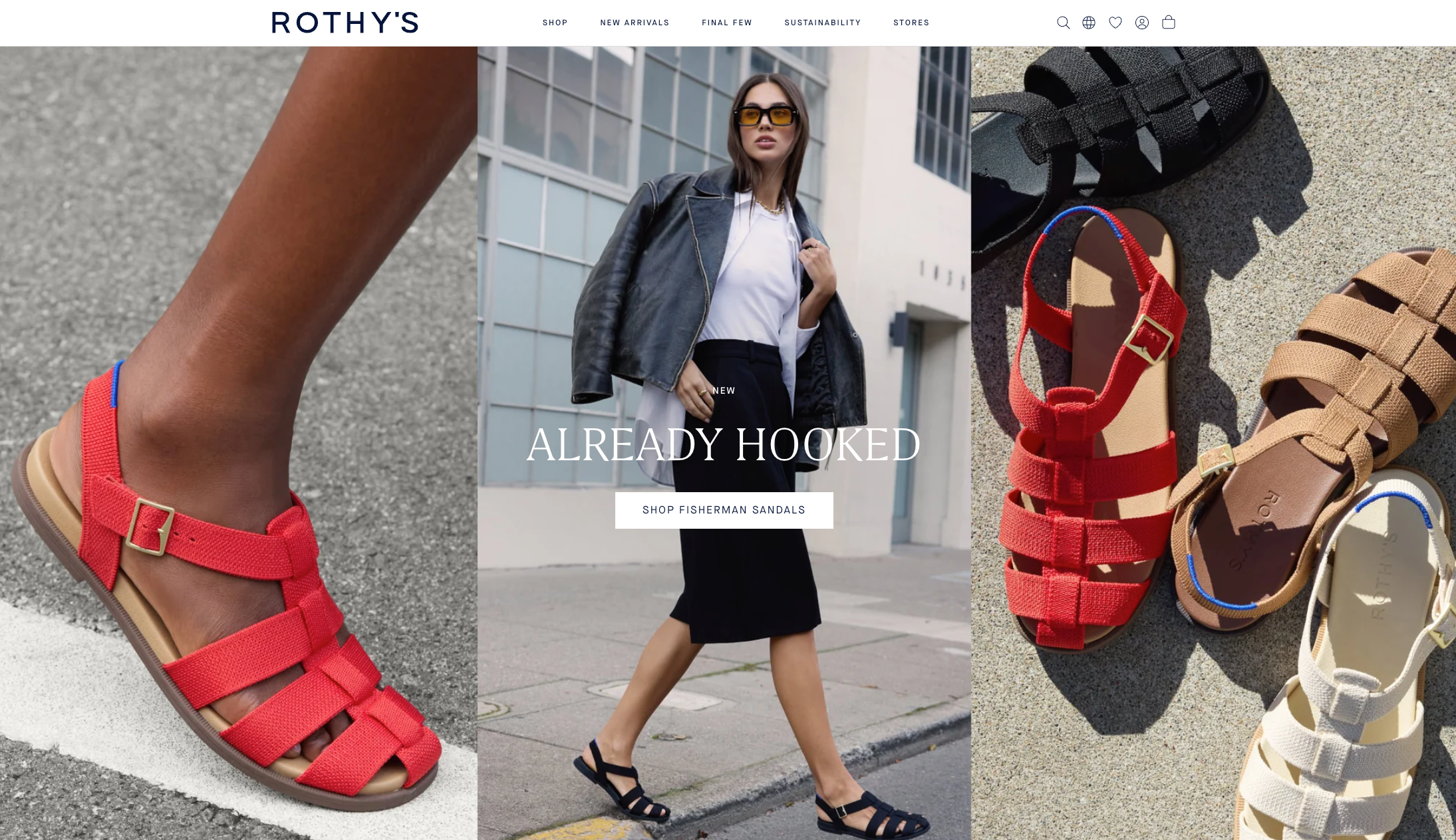
Rothy's built its brand on recycled plastic yarn: flats, loafers, and clogs made from ocean-bound plastic. Like Allbirds, it is a sustainable DTC story: comfort, conscience, direct-to-consumer.
But the trajectories diverged. Revenue held steady: $16.5M in May 2025, rose to $43.6M at the December peak, and settled at $16.9M in February 2026, indexed at 103, right where it started. The brand did not collapse. It rode holiday demand without collapsing into crisis discounting.
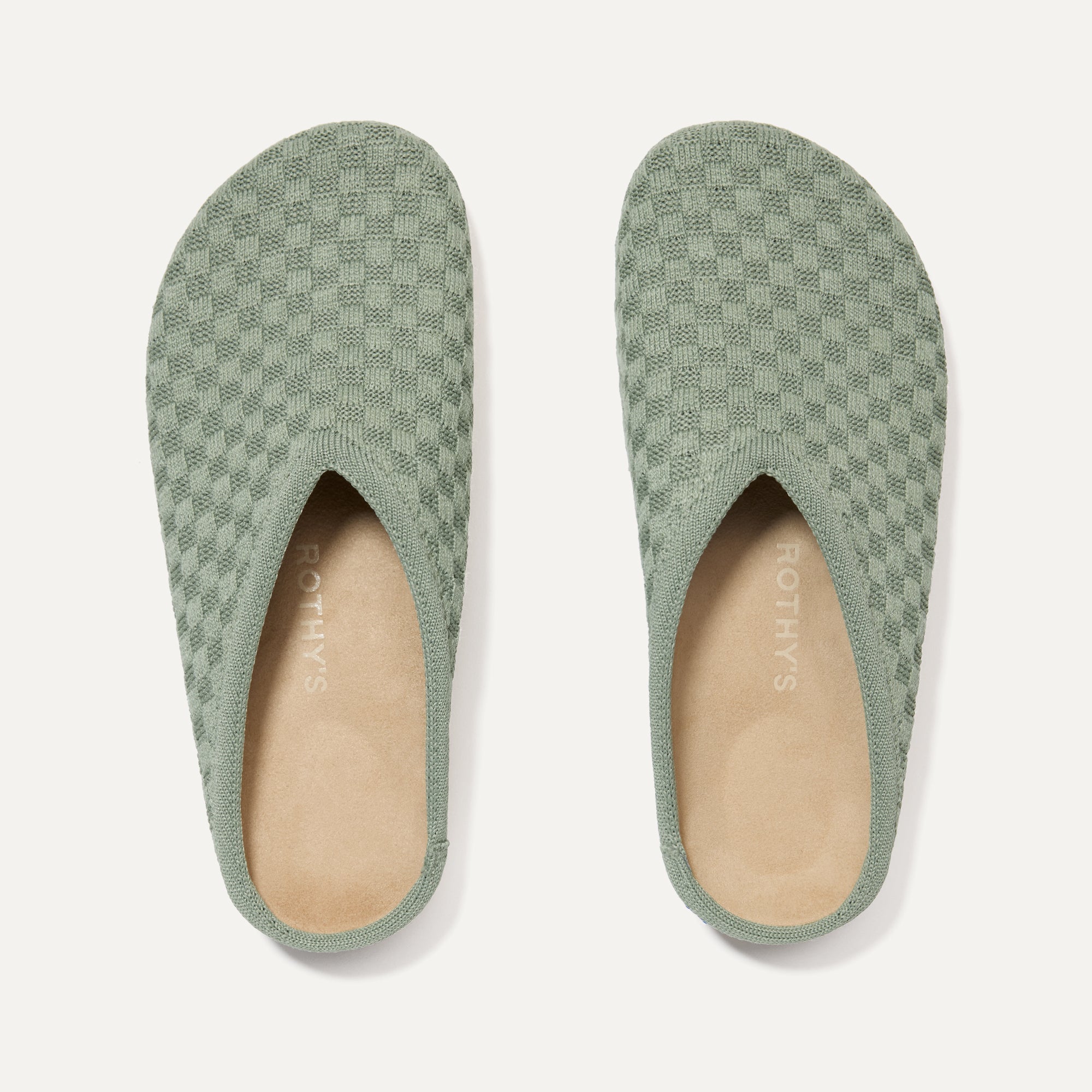
The hero product, The Casual Clog, leads at $2.2M in revenue. The charts below show how Rothy's rode holiday demand without crisis discounting and how the event mix stayed balanced.
Rothy's Monthly Revenue
Revenue in Millions (May 2025 to Feb 2026)
The event calendar explains the difference. Rothy's ran 38 Product Releases and 33 Promotions, roughly balanced. Allbirds ran 53 Promotions versus 35 Product Releases, leaning harder on discount levers. Rothy's invests in launches such as The Daily Flat, The Daily Driver, and seasonal clogs alongside Archive Event sales. Double Buckle Mary Jane and The Daily Flat sit close behind the hero. Average price held from $130 to $148 across the period, with no collapse to $75 like Allbirds.
Events by Type: Allbirds vs On vs Rothy's
Event count (May 2025 to Feb 2026).
The contrast with Allbirds is stark. Both are sustainable DTC brands: recycled materials, comfort, conscience. One collapsed into store closures and discount dependency; the other held full price authority and rode seasonal demand. Rothy's proves the category is not the problem. Execution is.
The takeaway: sustainable DTC can work. Balance product launches with promotions; protect pricing; avoid the retail expansion trap before unit economics support it.
Key Takeaway Sustainable DTC is not doomed. Rothy's shows the playbook: product authority, balanced event mix, pricing discipline. The category rewards brands that earn repeat demand at full price and punishes those that default to discounts.
Conclusion
-
Allbirds: Store closures and a pivot to digital only were preceded by months of revenue decline and heavy discounting. Promotions outnumbered product launches. Verify unit economics before scaling retail; lead with product authority, not promotions.
-
On Running: Performance and product launches drove growth while Allbirds retrenched. Product releases lead promotions nearly 2:1. Invest in launch velocity and authority; discounts stay minimal.
-
Rothy's: The sustainable DTC counterpoint. Recycled materials, same category ethos as Allbirds, but revenue held, indexed at 103 in February 2026. Balanced event mix, pricing discipline, and product launches. The category rewards brands that earn repeat demand at full price.