Logo for haypillow.com

Hay Pillow® | Particl Company Profile

haypillow.com

Logo for haypillow.com

Hay Pillow®

haypillow.com

Hay Pillow® is classified primarily as a(n)
Home & Garden
company.
2 years of historical data available

The Particl app allows you to view & filter data across any dimension, with sophisticated filters and aggregation tools to extract just what you need.


Join thousands of brands using Particl

Hexclad (https://www.hexclad.com) logoBoll & Branch (https://www.bollandbranch.com) logoPura (https://pura.com) logoCoop Sleep Goods (https://coophomegoods.com) logoSUNNYLiFe (https://www.sunnylife.com) logo

Hay Pillow® Overview

Particl's database contains the following information about Hay Pillow®:

Monitoring
34 Products · 77 SKUs/Variants
Data since
Aug 11, 2024
Popularity
Data types
AI Classified Product Types
Pricing
Instagram posts
Dataset
Online

Best Selling Product

Of all Hay Pillow® products monitored by Particl in the last month, Mini Hay Pillow® Slow Feeder Hay Bag is the best selling, at a price of $52.66. 34 products are available on the Particl app, and sortable by sales, sentiment, discount, or any other field.

More data is available in the Particl app
ImageNameSales
Product image for Mini Hay Pillow® Slow Feeder Hay Bag
Mini Hay Pillow® Slow Feeder Hay Bag
First seen Oct 22, 2024
$999K999K sold
Product image for Hanging Hay Pillow® - Small Mesh Hay Net Alternative
Hanging Hay Pillow® - Small Mesh Hay Net Alternative
First seen Oct 22, 2024
$999K999K sold
Product image for Manger Hay Pillow® Horse Trailer Hay Bag
Manger Hay Pillow® Horse Trailer Hay Bag
First seen Oct 22, 2024
$999K999K sold
Product image for ManeStay Equine Emergency ID Tag
ManeStay Equine Emergency ID Tag
First seen Oct 22, 2024
$462 sold
Product image for Day Slow Feed Small Mesh Hay Net
Day Slow Feed Small Mesh Hay Net
First seen Oct 22, 2024
$371 sold
Product image for Harmany Grazing Muzzle
Harmany Grazing Muzzle
First seen Oct 22, 2024
$00 sold
Product image for Solid Brass Swivel Clip
Solid Brass Swivel Clip
First seen Oct 22, 2024
$00 sold
Product image for Small Bale Cinch Net
Small Bale Cinch Net
First seen Oct 22, 2024
$999K999K sold
Product image for Version II Standard Hay Pillow® Net Panel
Version II Standard Hay Pillow® Net Panel
First seen Oct 22, 2024
$999K999K sold
Product image for Aging Horse by Dr. Juliet M. Getty, Ph.D.
Aging Horse by Dr. Juliet M. Getty, Ph.D.
First seen Oct 22, 2024
$999K999K sold

Similar Competitors

Equine Now, saddlery.com, ChickSaddlery, and more have been identified as similar to Hay Pillow® by Particl, based on the types of products they sell, and their online presence.

AI-Generated News & Events

Particl's AI-powered platform generates news and events for Hay Pillow® based on their promotions, marketing, and Particl's proprietary data. Recently, Hay Pillow® has been up to the following:

No significant events detected in the last month

Product Types

Horse Food is the most common product type of all Hay Pillow® products, it made $346 in revenue last month alone.
Hay Pillow® operates across broader categories like Pet Bowls & Feeders, Pet Food, Pet Travel & Outdoors, and more that Particl classifies. Product types are broken down further in the Particl app.

Horse Food

Health, Fitness & Dieting

3

3

Company Assets

Particl has collected over 25M promotional assets for companies like Hay Pillow®. Social channels like website homepage, Instagram, SMS and email marketing are gathered and processed daily to inform Particl's AI.
Instagram from May 9, 2025
Understanding Equine Transport Stress and Care
🐴Transport 𝘪𝘮𝘱𝘢𝘪𝘳𝘴 𝘦𝘷𝘦𝘳𝘺 𝘯𝘢𝘵𝘶𝘳𝘢𝘭 𝘴𝘶𝘳𝘷𝘪𝘷𝘢𝘭 𝘪𝘯𝘴𝘵𝘪𝘯𝘤𝘵: 👀sight, 👂sound, 👃smell and 🏇flight to detect and flee from perceived danger. Impairment of these instincts causes stress. 𝘌𝘲𝘶𝘪𝘯𝘦𝘴 𝘢𝘳𝘦 𝘴𝘵𝘰𝘪𝘤 𝘣𝘺 𝘯𝘢𝘵𝘶𝘳𝘦 and do not always exhibit outward signs of stress. Suffice it to say that if your equine is transported, he is stressed🥺 internally, to some degree. Some may exhibit stress outwardly by refusing to load, pawing once in the trailer, whinnying or kicking the walls. Equines rarely do anything that doesn’t have a purpose. They don’t have the mental capacity to ponder and carry out acts intended to be annoying. It is our responsibility as their guardians to reduce their stress level mentally and physically to the best of our ability.​ ☺ 🏇 Understanding your equines' natural survival instincts allows you to incorporate measures to minimize the physical and mental stress of transport. Being empathetic to your horse's needs helps to ensure a happier, healthier companion on the road and at home. 🌿Learn more about the benefits of having forage available while transporting; prior to, during & once you arrive at your destination👉follow the link in bio 👉 tap on Blog Posts – Organized By Topic👉 Tap on Gut Health - (Colic & Ulcers) 👉tap on Why You Shouldn't Transport Horses on An Empty Stomach #healthyhorses #happyhorse #equinehealth #healthyhorse #horsecare #equinelife #equinetransport #pony #donkey
Instagram from May 8, 2025
🔹Feed all grain or pelleted feeds in a large tub on stall mats
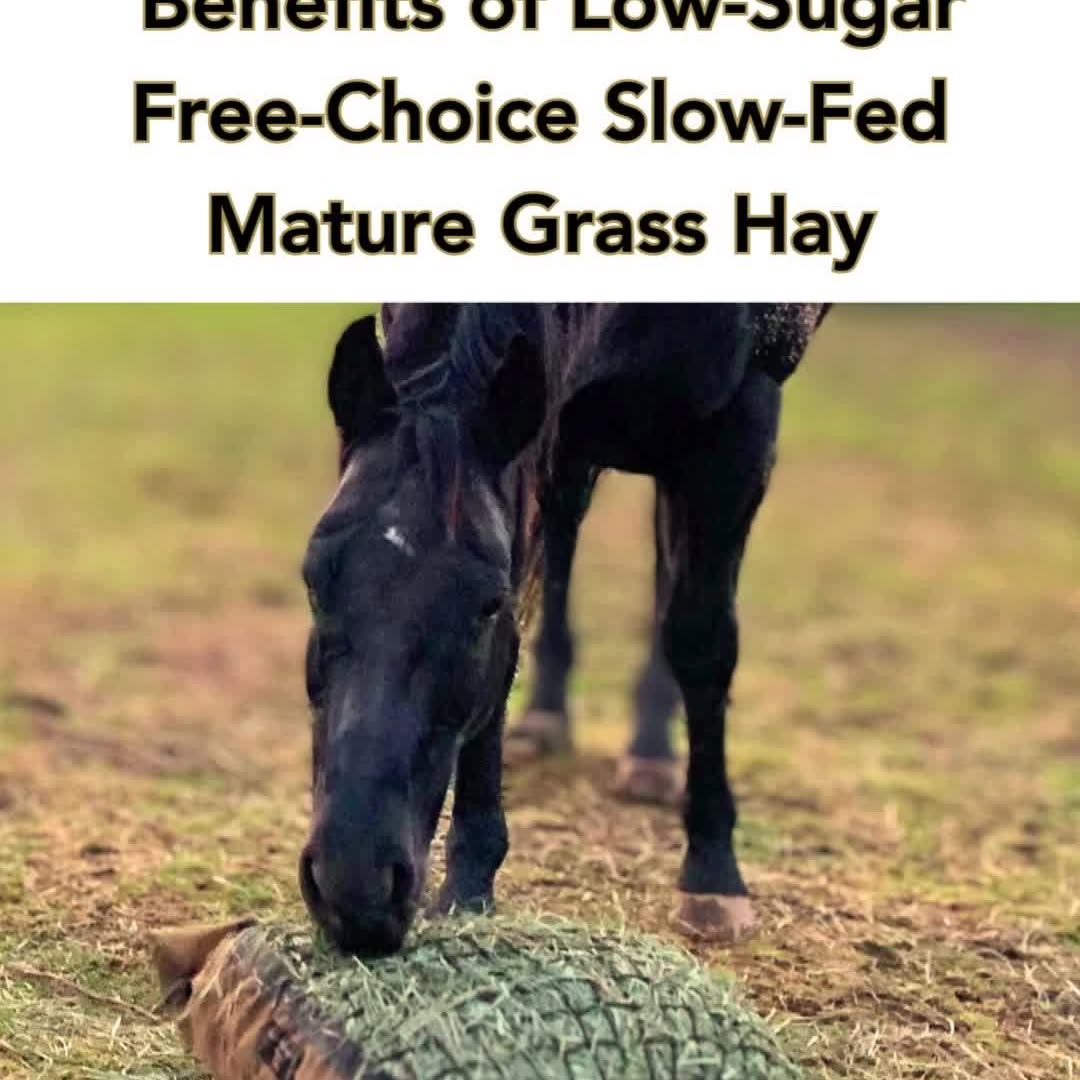
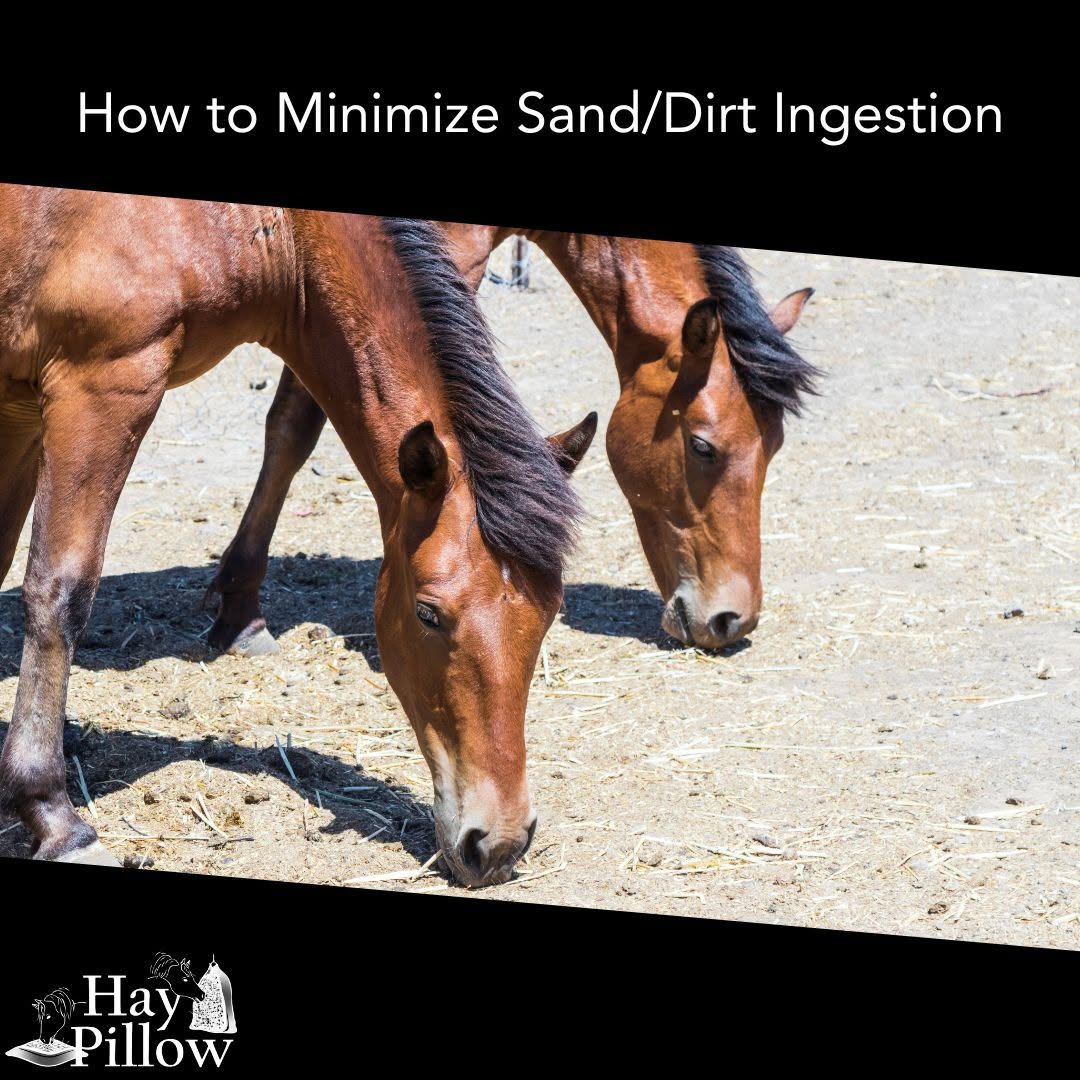
🔹Feed all grain or pelleted feeds in a large tub on stall mats. 🔹If your equine is fed meals, prevent any hay from falling on the ground. If the only source of hay is the last tiny bits (fines), scrounging for them in sand or dirt greatly increases the odds of accumulation. 🔹Avoid grazing on short pasture grasses. 🔹Provide loose or slow-fed free-choice hay. If concerned about caloric intake, provide a minimum of 2 - 2 ½ % of body weight in hay a day that is 10% or less in NSC’s in slow feeders. 🌿When choosing slow feeders, look for those that best contain hay from falling on the ground. Always select a mesh size best suited for your horse's skill and frustration level. Horses🐴 are designed to graze/forage 16-20 hours a day - ingesting small amounts as they move from place to place. It is possible to mimic the horse's natural lifestyle – to allow free choice forage and slow consumption (if necessary) - while encouraging movement. This scenario compliments👍 their digestive tract - providing optimum conditions for a very complex, vast, and sensitive route of ingesta from intake to excretion. Learn the most effective means for removal & the best way to prevent sand accumulation👉 Follow the link in bio 👉 tap on Blog Posts – Organized By Topic👉 tap on Gut Health 👉 tap on Sand Colic - The Surprising (Simple) Cure & Prevention #sandcolic #equinecolic
Instagram from May 7, 2025
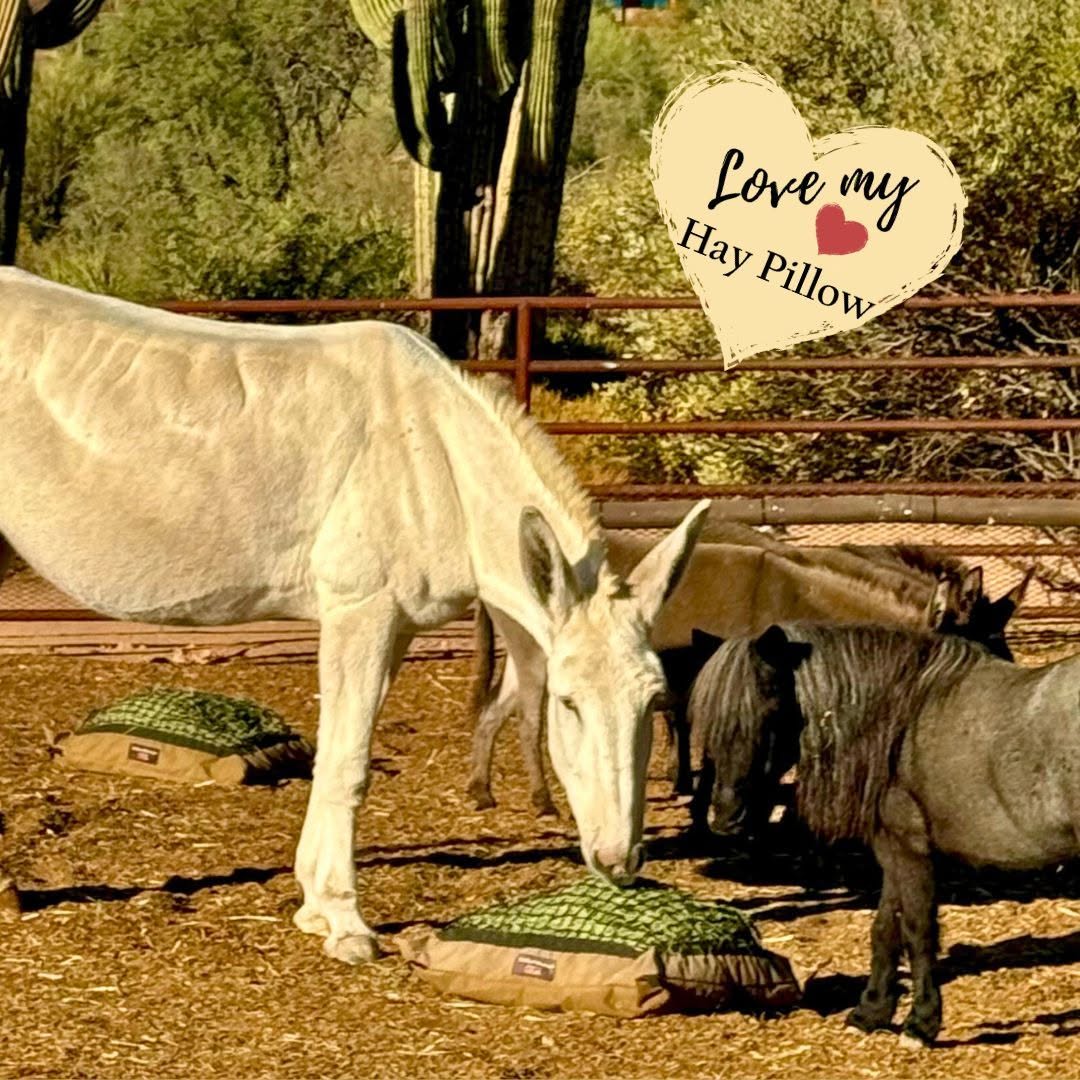
“Love the bonding, no matter the size
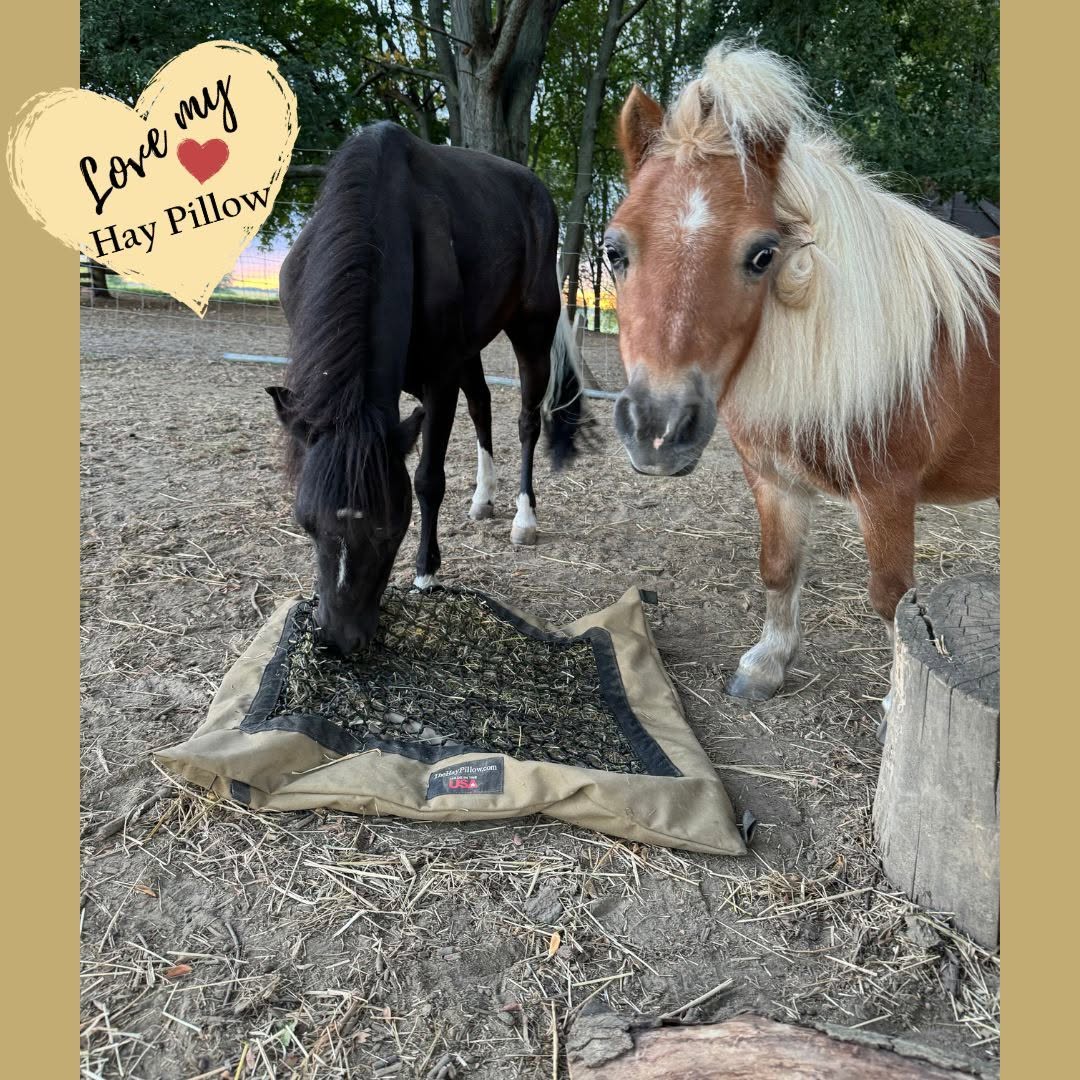
“Love the bonding, no matter the size! Blueberry and Elsa enjoying breakfast together. Notice the full Hay Pillow? There are enough to go around, but these two prefer to share.” Thanks, Tender Little Hearts Therapy, for sharing the ❤️. #lovemyhaypillow #donkeylove #donkey #donkeysofinsta #instadonkey #longearlove #lovedonkeys #donkeygram #donkeyfriends #donkeys #therapydonkey #minidonkey #standarddonkey #mammothdonkey #feedingdonkeys
Instagram from May 6, 2025
Follow the link in bio 👉 tap on Blog Posts – Organized by Topic 
 
Topics include: 
🕰Slow Feeding 🌿Hay & Diet 🐴Gut Health (Colic & Ulcers) 🐐Minis & Farm Animals 💪Health & Safety🦺 🥺Behavior 👩‍🌾Musings 🎉Giveaways 
 
#equinehealth #horsehealth
Follow the link in bio 👉 tap on Blog Posts – Organized by Topic Topics include: 🕰Slow Feeding 🌿Hay & Diet 🐴Gut Health (Colic & Ulcers) 🐐Minis & Farm Animals 💪Health & Safety🦺 🥺Behavior 👩‍🌾Musings 🎉Giveaways #equinehealth #horsehealth #horsecare #equinenutrition #naturalhorsecare
Instagram from May 6, 2025
🐴 💰What’s the last thing you bought at the feed store
🐴 💰What’s the last thing you bought at the feed store? #horseaddict #donkeyaddict #muleaddict
Instagram from May 5, 2025
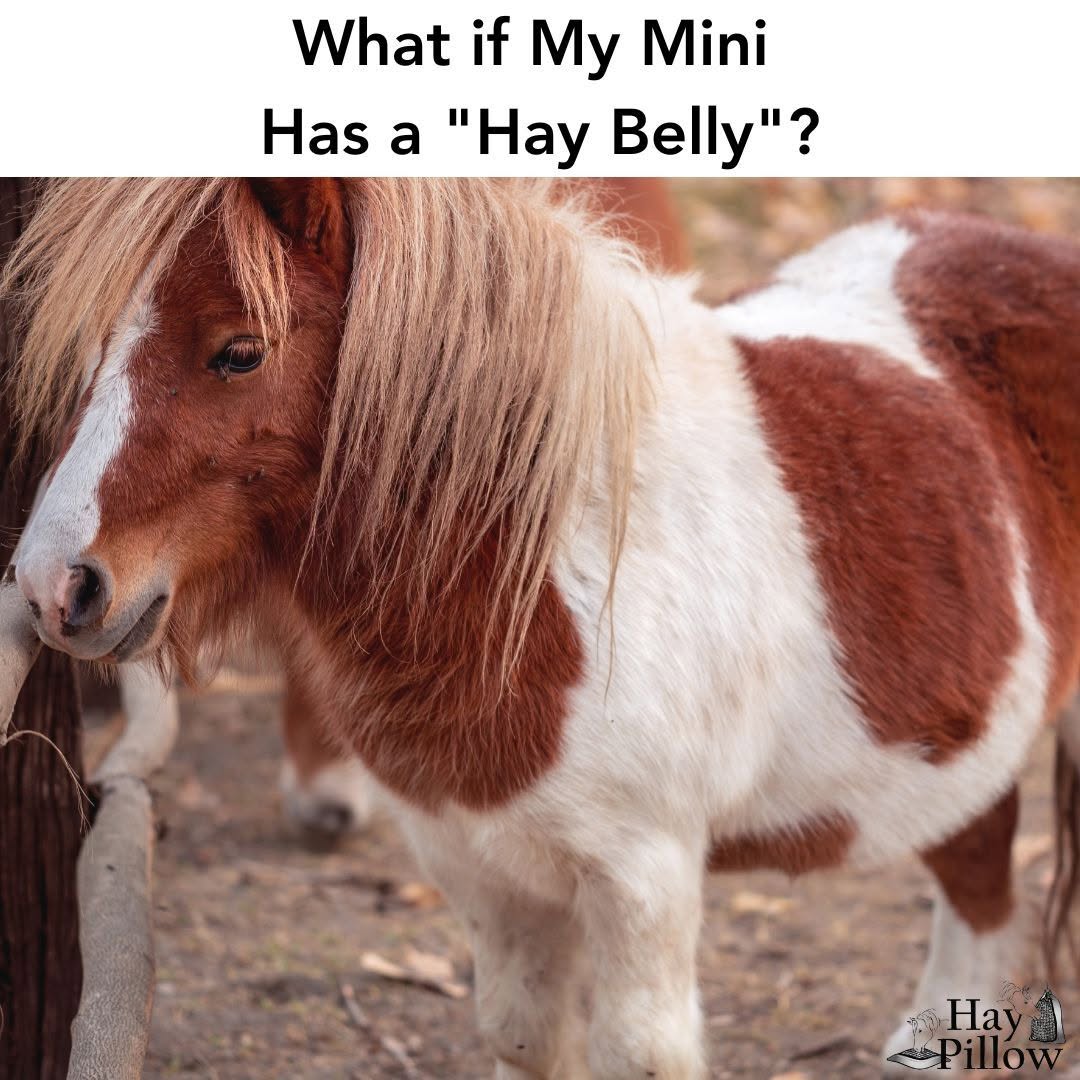
According to Juliet M
According to Juliet M. Getty, Ph.D. "A hay belly does not equate to an overweight horse when the rest of his body is normal, actual fat does not accumulate extensively on the horse’s lower abdomen (belly). Overweight individuals do accumulate worrisome fat in specific areas such as the neck, withers, back, ribs, shoulders, and tail head. Excessive fat in these areas can indicate the calories fed exceed the actual needs of the individual, lack of nutrients necessary for optimum thyroid and hormone function and/or the sugar and starch levels in your feeding program need to be assessed and/or reduced. Horse owners who deliberately limit hay consumption and replace it with cereal grain, hay pellets or complete feeds to avoid a hay belly are doing their horses a disservice and increase the risk of digestive and metabolic disorders. Forage (hay or pasture) should be the foundation of all horse’s diet." Additional causes of a distended abdomen can be attributed to ulcers and/or parasites. Excessive gas can give the appearance of a hay belly from large amounts of indigestible fiber lacking optimum mastication either from bolting hay or dental challenges. Meals that are quickly consumed reduce the optimum time necessary for each distinct region of the digestion tract to properly digest and prepare forage as it advances from ingestion to excretion (Mouth > Stomach > Small Intestine > Large Intestine). Slow feeding can minimize bloating/excess gas by promoting longer chew time per pound; reducing the size of particles and increasing saliva production better preparing fiber for the digestive tract. ​ Learn why slow fed forage is best for your mini's health. Find answers to common miniature horse diet questions & more 👉follow the link in bio 👉tap on Blog Posts – Organized by Topic 👉tap on Minis & Farm Animals 👉tap on Feeding Miniature Horses & Donkeys: Why Slow Fed Forage is Best #minihorses #minidonkey #minimule #minihorse #miniequinehealth
Instagram from May 3, 2025
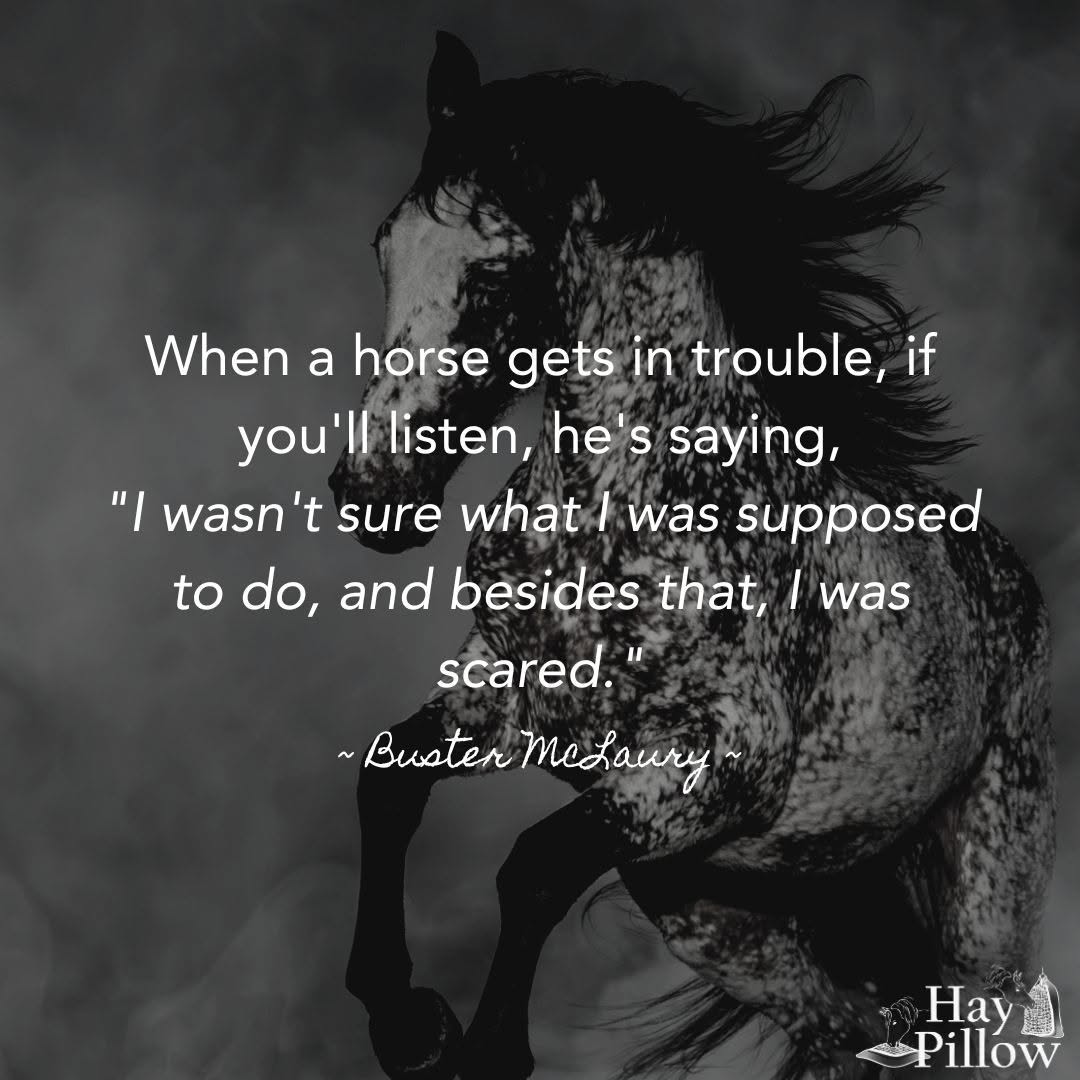
“When a horse gets in trouble, if you'll listen, he's saying, “I wasn't sure what I was supposed to do, and besides that, I was scared
“When a horse gets in trouble, if you'll listen, he's saying, “I wasn't sure what I was supposed to do, and besides that, I was scared.” ✍️Buster McLaury
Instagram from May 2, 2025
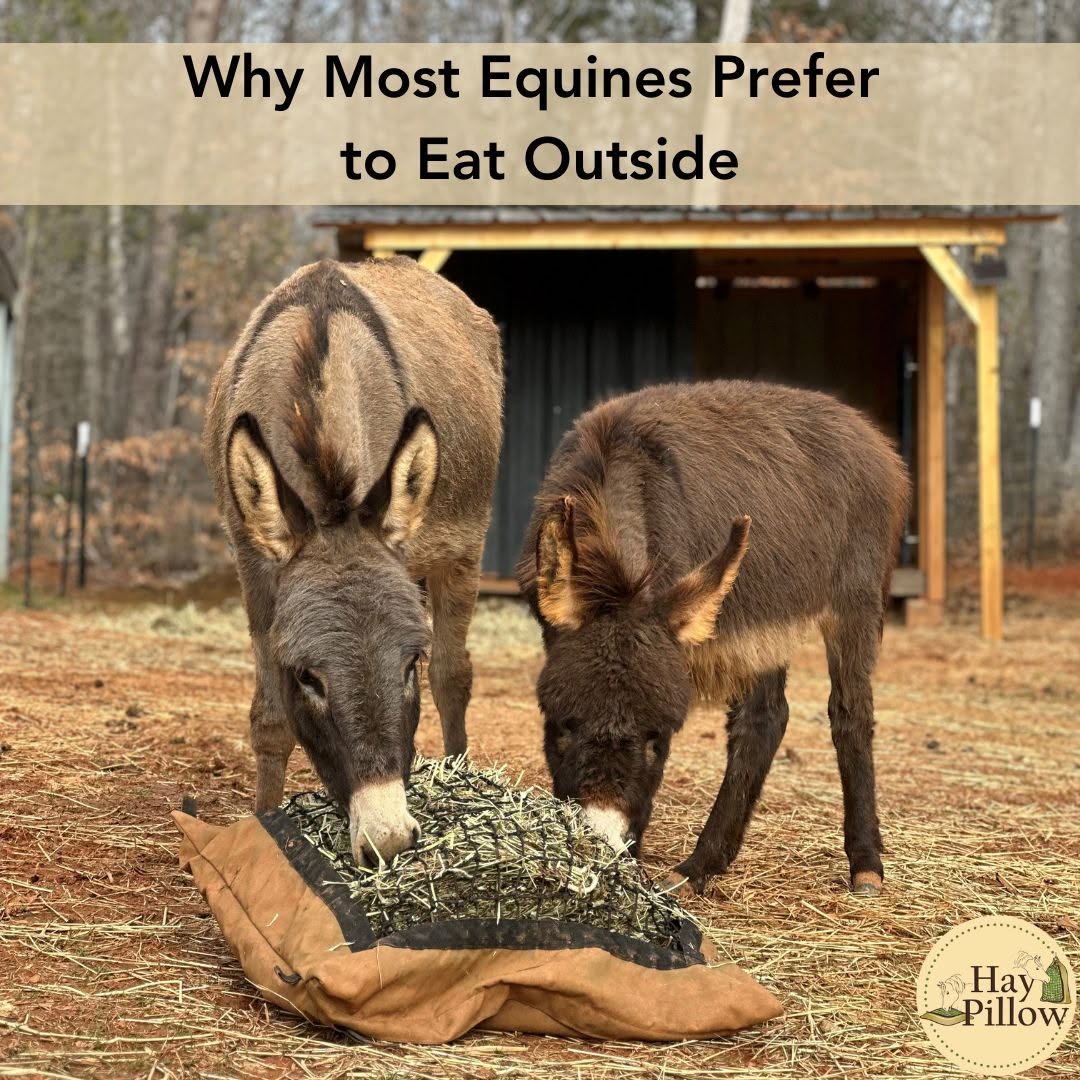
Equines are prey animals; their main form of defense is flight which requires sight 👀 and sound👂 to detect predators in conjunction with other herd members standing guard and alerting each other
Equines are prey animals; their main form of defense is flight which requires sight 👀 and sound👂 to detect predators in conjunction with other herd members standing guard and alerting each other. An equine may experience psychological tension if by themselves and/or sight and sound are impaired. They feel more secure and safe when eating from ground level in an open area (unobstructed peripheral vision) with herd mates. Equines typically prefer to eat outside in the open if given a choice - despite most weather conditions 🌧☀❄. Mother nature provides them with a very effective thermoregulation system. Equines are stoic💪 by nature and do not always exhibit outward signs of stress because that would make them more vulnerable to prey, appearing as a weak individual in the herd. Providing multiple locations to eat from encourages movement and allows them to choose where they are most mentally comfortable. An enclosed confining area (stall or shed with sides) would be most human’s choice for physical and mental comfort in the elements, but we are not prey! Providing your herd with appropriate shelter from the elements with free choice forage🌿 available in multiple locations allows them to be as mentally comfortable as possible and encourages a more natural lifestyle. Learn more about equine behavior 👉 follow the link in bio 👉 tap on Blog Posts – Organized By Topic 👉 tap on Behavior
Instagram from May 1, 2025
❤️Thanks Jen, for sharing, “Here's my beautiful boy Magic Thyme enjoying his Hay Pillow
❤️Thanks Jen, for sharing, “Here's my beautiful boy Magic Thyme enjoying his Hay Pillow. He chooses his pillow over multiple feeding stations in his stable and I love how it promotes natural feeding. We love it so much." Follow the link in bio 👉tap on Visit Our Website #haybags #horsehay #feedinghorses #slowfeedhaybag #slowfeedinghorses
Instagram from Apr 30, 2025
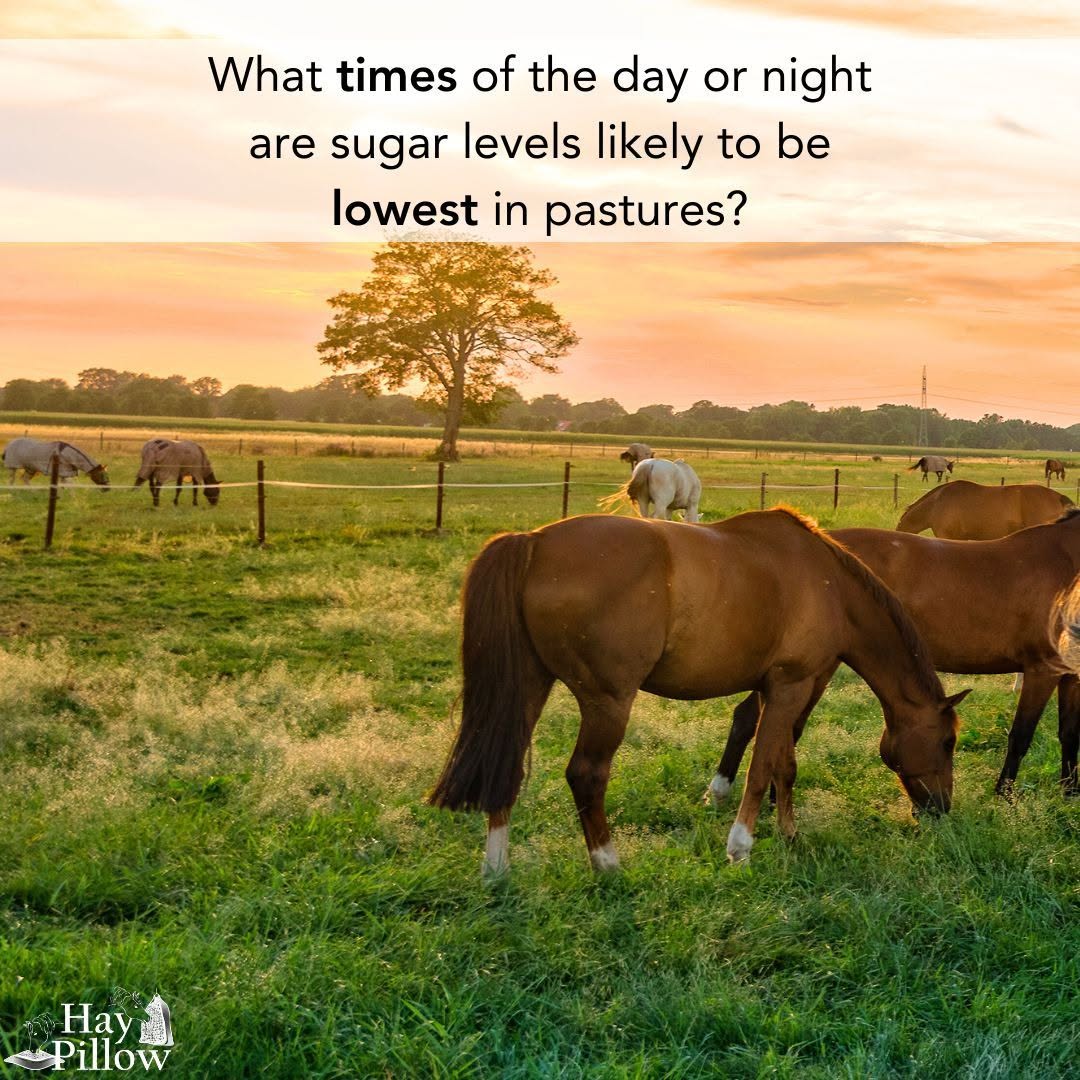
What times of the day or night are sugar levels likely to be lowest in pastures
What times of the day or night are sugar levels likely to be lowest in pastures? “When conditions for grass growth are optimum, sugar levels are lowest from about 🕒 3AM to 🕙 10AM. When nights are near freezing ❄, or drought stress 😳💧 is ongoing, sugar levels stay high around the clock ⚠ and sensitive horses should be removed from pasture.” ​ ✍️- Katy Watts, Founder of Safergrass.org Katy Watts of Safergrass.org answers questions about the contributing factors that influence sugar levels in horse hay & pasture, testing, turnout & more. Follow the link in bio 👉 tap on Blog Posts – Organized By Topic👉 tap on Hay & Diet 👉 tap on Sugar Content of Pasture & Hay: Q & A with Katy Watts' #healthyhorse #equinehealth #horsepasture #equinenutrition ​
Instagram from Apr 30, 2025
“Marley and Stormy love hay they don’t have to reach up for, I love that the same hay that used to be gone in an hour keeps them busy most of the day
“Marley and Stormy love hay they don’t have to reach up for, I love that the same hay that used to be gone in an hour keeps them busy most of the day!” Thanks, Lindsay, for sharing the ❤️. #lovemyhaypillow #haynets #haybags #slowfeedhaynet #instapony #horsehay #feedingponies #poniesofig #slowfeedhaybag #slowfeedingponies
Instagram from Apr 29, 2025
Slow feeding with multiple locations🌎 enables your entire herd to eat and live together full time by leveling the playing field
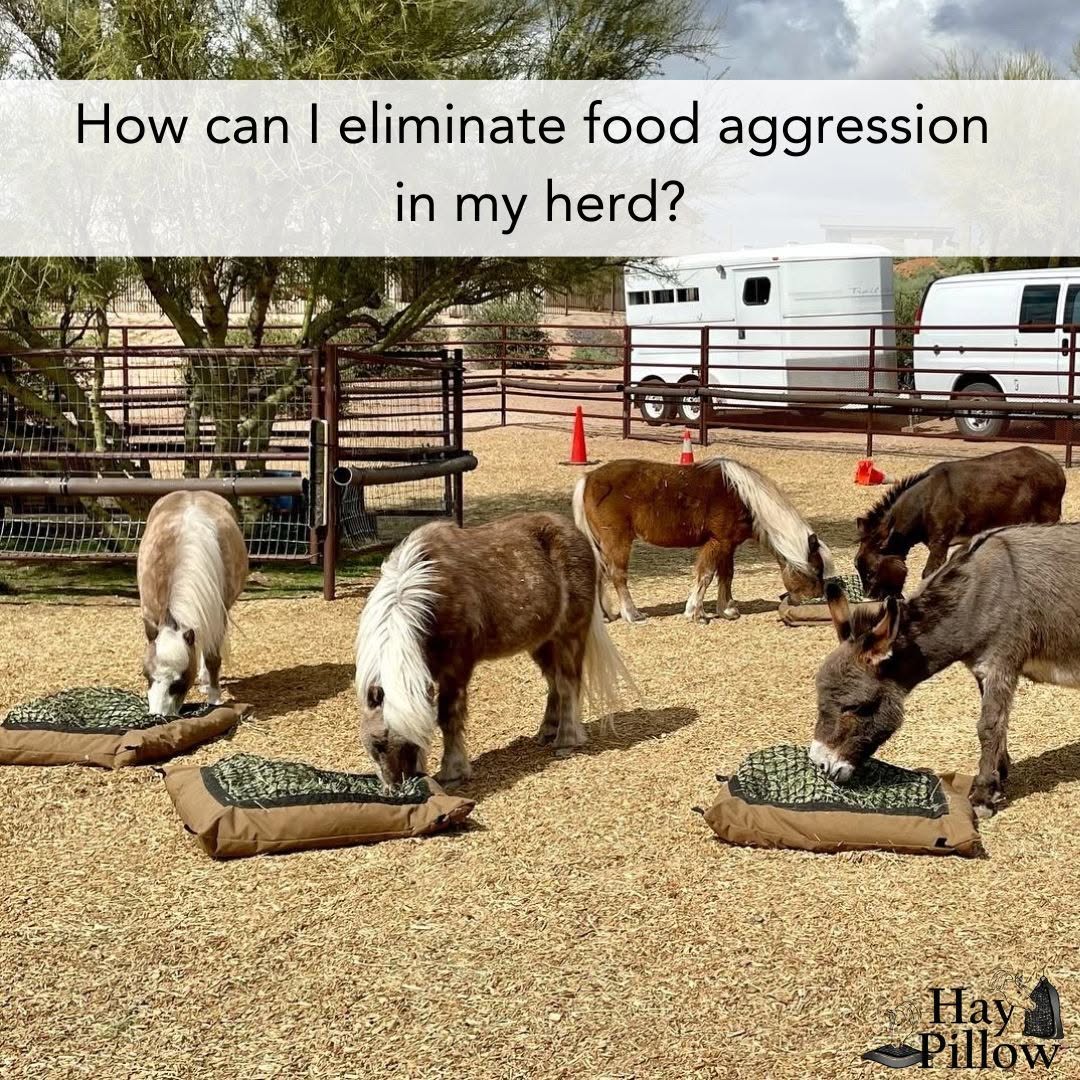
Slow feeding with multiple locations🌎 enables your entire herd to eat and live together full time by leveling the playing field. The individual that typically consumed the most in the least amount of time will be regulated. Equines are herd 🐴🐴🐴🐴 animals. They benefit physically and psychologically ☺️ from direct physical interaction. Dominant members will keep the others moving as they claim various locations. The less dominant individuals will have alternate sources to eat from; this encourages movement and can decrease cortisol levels associated with stress from being physically separated from herd members. If you have an individual that requires additional calories, separate them for additional feedings of soaked hay pellets or complete feeds and allow them to rejoin the herd. Hierarchy will always exist in a herd, the majority of aggressive 😠 behavior is associated with food/resource guarding. If free choice forage is available, the intensity of dominant combative behavior typically subsides because food is no longer considered a limited life sustaining resource. Expand your slow feed savvy knowledge🤓; Follow the link in bio 👉 tap on Blog Posts – Organized By Topic👉 tap on Slow Feeding 👉 tap on 9 Benefits of Slow Feeding Horses - Get Slow Feed Savvy #equinehealth #horsehealth #horsecare #equinenutrition #naturalhorsecare #equinedigestion
Instagram from Apr 28, 2025
Erring on the side of caution, I never combine multiple vaccines, sedation or dewormers - nor do I administer successively within a short period of time
Erring on the side of caution, I never combine multiple vaccines, sedation or dewormers - nor do I administer successively within a short period of time. Why🤔? Combining or administering successively compromises your horse's overall well-being. It also introduces a wide array of challenges to the immune system, which weakens the ability to respond effectively.​ The immune system is like an army. If half of the soldiers are battling adverse effects or appropriately reacting to a vaccine, the capacity to respond to additional threats is reduced.​ 🔺Vaccines: If you combine and your horse has an adverse reaction, you may not be able to attribute it to the vaccine - or determine if you should use that brand again. In addition, the vaccine's effectiveness may be compromised if the horse's immune system is not able to respond appropriately. 🔺Sedation/Tranquilizers: Side effects can include but are not limited to: salivation, sweating, diarrhea, elevated blood glucose, decreased intestinal motility, labored breathing and reduced heart rate. These cause additional battles for the immune system to fight. 🔺Deworming: Together, the chemical - combined with parasite die-off (releasing parasitic endotoxins) - can account for quite a toxic load. Often times individuals with a large parasite burden are already compromised and may be subject to impaction colic due to the sheer volume of parasites to excrete. ​We, as guardians, know our beloved herd🐴🐴🐴 better than anyone. It is our responsibility to be their advocate! Know and track ✏your horse's optimal baselines, doses, and any adverse reactions. Thoughtfully☺️ schedule routine treatments and procedures over an optimum time period📅 to minimize the impact on their immune system and overall well-being. ​ 🤔Learn about critical information to keep on hand and what to consider if a combination of tasks/treatments are scheduled in the same visit from your vet. Follow the link in bio 👉tap on Blog Posts – Organized by Topic 👉tap on Health & Safety 👉tap on Considerations If Giving Vaccines, Sedatives or Dewormers Concurrently #healthyhorse #equinevitalsigns #horsehealth
Instagram from Apr 26, 2025
“If opportunity doesn't knock, build a door
“If opportunity doesn't knock, build a door.” ✍️Milton Berle
Instagram from Apr 25, 2025
According to studies🤓 at the University of Florida, hay is overwhelmingly the most effective way to move sand from the digestive tract and prevent accumulation
According to studies🤓 at the University of Florida, hay is overwhelmingly the most effective way to move sand from the digestive tract and prevent accumulation. The University of Florida tested four means of sand removal: 🌿Hay fed at 1.5% of body weight 🌿Hay fed at 2.5% of body weight 🌿Hay fed at 1.5% of body weight, plus psyllium fed in a single daily dose 🌿Hay fed at 1.5% of body weight with psyllium fed twice daily. The results indicated that feeding hay at 2.5% of body weight (25 lbs. for a 1000 lb. horse) uniformly produced the largest sand output. Free choice hay - via slow feeders or loose - supplies a steady supply of fiber moving through the digestive tract carrying sand out with manure prior to settling⬇ in the large colon by promoting gut motility and volume. Learn the most effective means for removal & the best way to prevent sand accumulation👉 Follow the link in bio 👉 tap on Blog Posts – Organized By Topic👉 tap on Gut Health 👉 tap on Sand Colic - The Surprising (Simple) Cure & Prevention #sandcolic #equinecolic
Instagram from Apr 24, 2025
Proper vitamin and mineral levels - including proper ratios - are necessary for proper thyroid, hormone, and neurological function
Proper vitamin and mineral levels - including proper ratios - are necessary for proper thyroid, hormone, and neurological function. Inadequate levels may be responsible for a Nervous Nellie😱! Wild horses have the luxury of grazing on a wide variety of forages 🎋🌿🌱 with the innate ability to choose plants rich in needed nutrients. Domestication reduces the variety of available forages. ​ Solutions Address the core diet. Something as simple as the supplementation of magnesium or B vitamins can make a drastic difference in their behavior. Consult an equine nutritionist 🤓 to ensure all vitamin/mineral, protein and omega requirements are being met in proper ratios and unique conditions addressed. Addressing and BALANCING ⚖ the diet is ideal. Vitamins and minerals directly interact🔄 with each other either as an antagonist⬇ or synergist⬆. This is where it gets tricky supplementing individual minerals or vitamins without knowing what nutrients the current diet possesses. Vitamins and minerals play a direct role in hormone function. Suffice it to say, most of us have experienced hormonal fluctuations😖 that alter our behavior and affect our stress level. Horses are no different. Providing necessary nutrients can significantly reduce or eliminate mood swings. ​ Unique conditions that can cause discomfort such as skin and respiratory allergies can often be resolved with a properly balanced diet. Address the core diet first for all conditions, then add other nutritional support if needed. The immune system requires proper nutrition to function at peak performance. Gastric (stomach) ulcers are commonly caused by lack of forage & stress. Learn how to protect your horse with these 7 actionable solutions 👉 Follow the link in bio 👉 tap on Blog Posts – Organized By Topic👉 tap on Gut Health 👉 tap on Causes of Equine Ulcers – 7 Stress Factors & Solutions #equinehealth #equinegastriculcers #horsehealth

Better Data with AI

Particl AI tracks sales, inventory, pricing, assortment, and sentiment across all of e-commerce. Quickly identify profitable opportunities in the market.

adidas.com

Explore emails, ads, and more

Agencies and marketers can cut through the noise and find the best ads, campaigns, and social media content about Hay Pillow® all in one place. Take it a step further in the Particl app to see how those campaigns are performing.

Frequently asked questions

AI Powered, Real-time Data for Modern Retail Businesses.